

There are few moments in pregnancy as magical as seeing your baby’s face for the very first time. The tiny nose, the softly rounded cheeks, and the instant, emotional question that crosses every parent’s mind: Who does the baby look like? For many families in London, Ontario, and surrounding areas, this moment creates a powerful bond—one that words can barely capture.
Ultrasound technology has evolved dramatically over the years. Early 2D scans were grainy and abstract, often resembling black-and-white snowstorms that required a trained eye to interpret. Today, expecting parents in London, ON and nearby communities can enjoy lifelike 3D images and real-time 4D videos that show their baby yawning, stretching, smiling, or even sucking a thumb.
With this incredible clarity and realism, it’s natural for parents to ask an important question—especially when booking an ultrasound locally:
Is all this extra detail safe for my baby?
The reassuring answer is yes—when 3D and 4D ultrasounds are performed by trained professionals who follow established medical safety guidelines, they are considered safe. However, like any medical technology, there are important rules, limits, and best practices that parents should understand before booking an elective scan.
This guide breaks down the science, safety standards, benefits, myths, and best practices of 3D and 4D ultrasounds so you can make a confident and informed decision for you and your baby.
Breaking Down the Technology: 2D vs. 3D vs. 4D Ultrasound
Before discussing safety, it helps to understand what actually makes these ultrasound types different. While the images may look very different, the underlying technology is the same.
2D Ultrasound: The Medical Standard
2D ultrasound is the traditional imaging method used in routine prenatal care. It produces flat, black-and-white images that show cross-sections of the baby inside the womb.
Doctors rely on 2D ultrasounds to:
- Check fetal growth and measurements
- Monitor heartbeat and movement
- Examine organs, placenta placement, and amniotic fluid levels
This form of ultrasound remains the foundation of medical prenatal imaging and is essential for monitoring pregnancy health.
3D Ultrasound: The Still Image
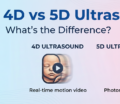
A 3D ultrasound captures multiple 2D images from different angles. Advanced software then stitches these images together to create a three-dimensional picture.
The result is a still image with depth, allowing parents to clearly see facial features such as the baby’s lips, nose, cheeks, and even facial expressions. This type of imaging is often used for bonding and, in some cases, for additional medical evaluation.
4D Ultrasound: The Live Stream
A 4D ultrasound is essentially a live version of 3D imaging. Instead of a single still image, parents can watch their baby move in real time.
This allows you to see:
- Smiling or yawning
- Blinking
- Stretching or moving hands and feet
For many families, 4D ultrasounds create a deeply emotional and memorable experience.
Key Takeaway
All three types of ultrasounds use the same non-ionizing sound waves.
The difference lies in how the computer processes the information—not in the type or strength of energy used.
The Safety Verdict: What the Experts Say
No Radiation Involved
One of the most important facts for parents to understand is that ultrasound does not use radiation. Unlike X-rays or CT scans, ultrasound relies on high-frequency sound waves that bounce off tissues to create images.
This is one of the main reasons ultrasound has been safely used in pregnancy for decades.
FDA & AIUM Guidelines: “Prudent Use”
Medical organizations such as the FDA (Food and Drug Administration) and AIUM (American Institute of Ultrasound in Medicine) agree that diagnostic ultrasound has no proven harmful effects when used properly.
However, they strongly emphasize the principle of prudent use, which means ultrasounds should:
- Be performed by trained and qualified professionals
- Use appropriate and controlled power settings
- Be limited in duration
These organizations discourage “keepsake-only” ultrasounds performed without medical oversight—not because ultrasound is dangerous, but because unnecessary or excessive exposure should always be avoided.
The ALARA Principle
You may hear ultrasound professionals mention ALARA, which stands for As Low As Reasonably Achievable.
This principle means:
- Using the lowest possible energy settings
- Limiting scan time to what is necessary
- Avoiding repeated or prolonged exposure
Responsible clinics strictly follow the ALARA principle to ensure maximum safety for both parent and baby.
Risks of Unregulated “Boutique” Scans
The concern with 3D and 4D ultrasounds is not the technology itself—it’s how and where it’s used.
Potential risks of unregulated or poorly managed scans include:
- Higher power settings used to enhance image appearance
- Untrained operators who may miss medical concerns
- False reassurance if parents rely on elective scans instead of medical ultrasounds
This is why choosing a reputable provider with proper credentials is essential.
The Benefits: Why Parents Choose 3D & 4D Ultrasounds
Stronger Parental Bonding
Seeing a realistic image of your baby often makes pregnancy feel more real and emotionally tangible—especially for partners and family members. Many parents report feeling more connected and emotionally prepared after a 3D or 4D ultrasound session.
Additional Diagnostic Insight
In certain medical situations, doctors may use 3D imaging to better visualize specific conditions, such as:
- Cleft lip or palate
- Spinal abnormalities
- Facial or skeletal concerns
While 2D ultrasound remains the medical standard, 3D imaging can provide valuable clarity in select cases
Emotional Reassurance
For many parents—especially first-time parents—seeing their baby’s face can significantly reduce anxiety. It often replaces fear of the unknown with excitement, reassurance, and confidence about the pregnancy.
Best Practices for Parents: The Safety Checklist
If you’re considering a 3D or 4D ultrasound, following these best practices can help ensure a safe and positive experience.
1. Choose the Right Timing
The ideal window for 3D and 4D ultrasounds is usually between 26 and 32 weeks of pregnancy. At this stage:
- The baby has developed enough facial fat for clear images
- There is still sufficient amniotic fluid for good visibility
2. Stay Well Hydrated
Drinking plenty of water in the days leading up to your scan helps improve image quality by increasing amniotic fluid clarity.
3. Verify Qualifications
Always ask whether the sonographer is RDMS-certified (Registered Diagnostic Medical Sonographer) or holds similar professional credentials.
4. Limit Session Length
A responsible elective ultrasound session should typically last no longer than 25–30 minutes.
5. Consult Your OB-GYN
Before booking an elective scan, discuss it with your healthcare provider—especially if you have a high-risk pregnancy or existing medical concerns.
Common Myths Debunked
Myth 1: “3D ultrasounds use stronger or more powerful waves.”
Fact: They use the same sound frequencies as 2D ultrasounds. The 3D effect is created by software, not stronger energy.
Myth 2: “The baby can hear or feel the ultrasound.”
Fact: Research shows that babies are not disturbed by diagnostic ultrasound levels when guidelines are followed.
Myth 3: “More ultrasounds mean better care.”
Fact: Quality and medical necessity matter more than the number of scans. Always follow professional medical advice.
Conclusion
3D and 4D ultrasounds can be a beautiful and emotional experience, offering parents an unforgettable glimpse of their baby before birth. When performed responsibly—by trained professionals, following medical guidelines, and adhering to the ALARA principle—they are considered safe.
The key is balance. These scans should complement, not replace, standard prenatal care. Image quality and emotional moments should never come before your baby’s health and safety.
Frequently Asked Questions (FAQs)
1. Are 3D and 4D ultrasounds safe for my baby?
Yes. When performed by trained professionals following medical safety guidelines, 3D and 4D ultrasounds are considered safe. They use the same sound-wave technology as standard 2D ultrasounds and do not involve radiation.
2. What is the difference between a medical ultrasound and a keepsake ultrasound?
Medical ultrasounds are performed for health monitoring and diagnosis by certified professionals. Keepsake ultrasounds are elective and focused on bonding. While bonding scans can be safe, they should still be done by qualified providers who follow proper safety standards.
3. What is the best time during pregnancy to get a 3D or 4D ultrasound?
The best time is usually between 26 and 32 weeks of pregnancy. During this period, the baby’s facial features are well developed, and there is enough amniotic fluid for clear images.
4. How long should a 3D or 4D ultrasound session last?
A responsible elective session should typically last no more than 25–30 minutes. Shorter sessions help follow the ALARA safety principle and reduce unnecessary exposure.
5. Can 3D or 4D ultrasounds replace regular prenatal scans?
No. 3D and 4D ultrasounds should never replace standard prenatal medical ultrasounds. They are best used as a complement to routine care, not a substitute for medical monitoring.